Build A Stunning Startup Landing Page With GitHub
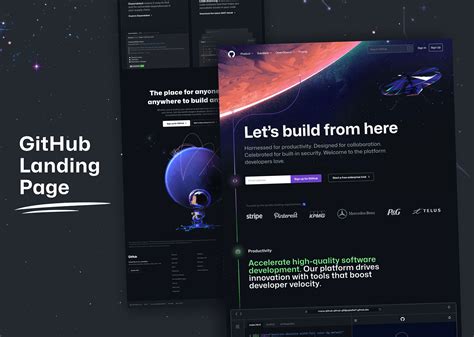
Build a Stunning Startup Landing Page with GitHub
Hey everyone! 👋 Ever dreamed of launching your own startup? Well, one of the first things you’ll need is a killer landing page. It’s your digital storefront, the place where you hook potential customers and explain what you’re all about. And guess what? You don’t need to be a coding guru to build one! Today, we’re diving into how you can create an amazing startup landing page using GitHub , a platform you might already be familiar with, or at least heard of. This guide is tailored for both beginners and those with a bit of experience. We’ll explore the process step-by-step , covering everything from choosing the right tools to deploying your page and making it look fantastic. So, grab your coffee ☕, and let’s get started!
Table of Contents
- Why GitHub for Your Startup Landing Page?
- Setting Up Your GitHub Account and Repository
- Designing Your Landing Page: Tools and Resources
- Choosing Your Tools
- Finding Inspiration and Resources
- Building Your Landing Page: Step-by-Step Guide
- Customizing Your Landing Page and Optimizing for Success
- Refining Your Design
- Optimizing for Success
- Additional Tips and Tricks
Why GitHub for Your Startup Landing Page?
So, why GitHub? 🤔 Great question! GitHub isn’t just for coders; it’s a versatile platform perfect for hosting your landing page, especially if you’re on a tight budget or just starting out. Here’s why it’s a brilliant choice for your startup:
- Free Hosting: GitHub Pages offers free hosting for static websites. That’s right, zero cost! This is a massive win for startups that are watching every penny.
- Easy Deployment: Deploying your landing page is super simple. With a few clicks, your page is live and accessible to the world. No complicated server setups required!
- Version Control: GitHub’s core function is version control. This means you can track changes to your landing page, revert to older versions if needed, and collaborate with others seamlessly. It’s like having a safety net for your website.
- Custom Domain: You can easily connect your custom domain to your GitHub Pages site. This gives your startup a professional look and feel.
- Markdown Support: GitHub supports Markdown, a simple markup language. This makes it easy to write and format content without needing to master complex HTML and CSS.
- Community and Resources: GitHub has a massive community and tons of resources. If you get stuck, you can find answers to your questions, tutorials, and examples to inspire you.
So, whether you’re a tech-savvy founder or a complete beginner, GitHub is a powerful and accessible tool for creating a stunning landing page. It eliminates the need for expensive web hosting and complex coding setups, allowing you to focus on your startup and its mission. This is a game-changer for entrepreneurs looking to get their ideas out there!
Setting Up Your GitHub Account and Repository
Alright, let’s get down to the nitty-gritty and set up your GitHub account. If you already have one, awesome! If not, don’t sweat it; we’ll walk you through the process. 💪
-
Create a GitHub Account: Go to GitHub’s website and sign up. You’ll need to provide an email address, create a username, and choose a password. Make sure to pick a username that’s relevant to your startup or your personal brand. Consider it your digital identity!
-
Verify Your Email: After signing up, GitHub will send you a verification email. Click the link in the email to verify your account. This is a crucial step to confirm your identity.
-
Create a New Repository: Once your account is set up and verified, it’s time to create a repository. Think of a repository as a folder where all your landing page files will live. Click the “+” icon in the top right corner and select “New repository.” Alternatively, you can click on the “Start a project” button on your dashboard.
-
Name Your Repository: Give your repository a name. Here’s a crucial tip: the repository name should be the same as your GitHub username +
.github.io. For example, if your username is “startupgenius,” your repository name should be “startupgenius.github.io.” This naming convention tells GitHub that it’s a user or organization page. If you’re creating a project page (for a specific project within your organization), then name it appropriately (e.g., “awesome-product”). -
Choose Repository Visibility: Decide whether your repository will be public or private. For your landing page, it’s usually best to make it public so everyone can see your work. However, if you are working on a private project, you can always make the repository private, but then you will need to pay for hosting.
-
Initialize with a README: Check the box that says “Initialize this repository with a README.” This creates a README.md file, which is a great place to introduce your project and provide instructions. Don’t worry, you can always edit it later!
-
Create the Repository: Click “Create repository.” And boom! Your repository is now created. 🎉
You’re all set! Now your GitHub repository is ready for your landing page files. This structure will become the foundation for hosting your landing page. Remember, choosing the right repository name is crucial for the deployment process, so double-check it.
Designing Your Landing Page: Tools and Resources
Okay, now for the fun part: designing your landing page! 🎉 Before diving into the technical aspects, you’ll need to have a design in mind. Lucky for you, there are many awesome tools and resources to help you create a fantastic landing page, even if you’re not a designer.
Choosing Your Tools
- HTML, CSS, and JavaScript (the basics): If you’re comfortable with some basic coding, HTML, CSS, and JavaScript are the core languages for creating a webpage. HTML structures your content, CSS styles it, and JavaScript adds interactivity. Don’t worry if you’re not a pro; there are many templates and frameworks to help you get started.
- Markdown: As mentioned earlier, GitHub supports Markdown. It’s a simple markup language, making it easy to format text, add headings, and create links. If you are starting out or you don’t want to mess with HTML, Markdown is a great choice!
-
Website Builders:
If you prefer a visual approach, website builders are a great choice. They offer drag-and-drop interfaces and pre-built templates, letting you design your landing page without coding. Popular options include:
- Carrd: Simple and affordable, ideal for one-page landing pages.
- Webflow: More advanced, offering design flexibility and control.
- Strikingly: User-friendly with easy-to-use templates.
- WordPress: While a bit more complex, WordPress is a versatile platform with tons of themes and plugins. (You’d need a separate hosting plan for WordPress, unlike GitHub Pages.)
-
UI/UX Design Tools:
If you want to create a mockup or prototype before coding, you can use these. Popular options include:
- Figma: A collaborative design tool with a free plan.
- Adobe XD: Adobe’s UI/UX design tool.
- Canva: User-friendly design tool for creating visuals and graphics.
Finding Inspiration and Resources
- Landing Page Examples: Check out websites like Land-book, Awwwards, and Behance for design inspiration. These sites showcase amazing landing pages, giving you ideas for layout, color schemes, and content.
- Free Templates: There are tons of free landing page templates available online. Search for “free landing page templates” to find options for HTML, CSS, and website builders.
- Color Palette Generators: Use tools like Coolors or Adobe Color to find the perfect color scheme for your brand. Color is very important in the branding of your landing page!
- Stock Photos and Icons: Unsplash, Pexels, and Pixabay offer free stock photos. Flaticon and Font Awesome provide free icons. Use high-quality visuals to make your landing page look professional.
- Learn the Basics of HTML and CSS: Don’t be afraid to get your hands dirty with the basics of HTML and CSS. You can find tons of free resources online, such as Codecademy, freeCodeCamp, and MDN Web Docs.
Having the right tools and a bit of inspiration will set you on the right path. Remember to keep your design simple, focused, and user-friendly. Your landing page’s main goal is to convert visitors into customers, so make sure your design supports that goal.
Building Your Landing Page: Step-by-Step Guide
Alright, let’s get down to the actual building of your landing page. I’ll take you through the steps, from creating your files to deploying your page on GitHub. Even if you’re a beginner, don’t worry, it’s easier than you think!
-
Create Your Landing Page Files:
-
HTML file (index.html):
This is the core of your landing page. It structures your content using HTML tags. You’ll include headings (
<h1>,<h2>), paragraphs (<p>), images (<img>), links (<a>), and other elements to build your page. -
CSS file (style.css):
This file contains your CSS rules, which control the styling of your page. You’ll define colors, fonts, layouts, and other visual aspects here. You’ll link this file to your HTML file using the
<link>tag within the<head>section of your HTML. -
JavaScript file (script.js - Optional):
If you want to add interactivity to your page (e.g., form validation, animations), you’ll use JavaScript. You’ll link this file to your HTML file using the
<script>tag, usually placed before the closing</body>tag. - Images: Create a folder named “images” and put all images you use on your landing page there. This helps keep your project organized.
-
HTML file (index.html):
This is the core of your landing page. It structures your content using HTML tags. You’ll include headings (
-
Structuring Your HTML (index.html):
-
Basic HTML Structure:
Start with the basic HTML structure, including
<!DOCTYPE html>,<html>,<head>, and<body>tags. Include the<meta charset="UTF-8">tag in the<head>to ensure your page displays characters correctly. Add a<title>tag to set your landing page’s title (this appears in the browser tab). -
Content:
Structure your content using semantic HTML tags. For example, use
<h1>for the main heading,<h2>for subheadings,<p>for paragraphs,<a>for links, and<img>for images. Wrap your content in sections (<section>) and divisions (<div>) to organize your layout. -
Linking CSS:
In the
<head>section, include the<link>tag to link your CSS file:<link rel="stylesheet" href="style.css">. This tells the browser to apply the styles in your CSS file. -
Linking JavaScript:
Include the
<script>tag before the closing</body>tag to link your JavaScript file:<script src="script.js"></script>.
-
Basic HTML Structure:
Start with the basic HTML structure, including
-
Styling with CSS (style.css):
- Choose a CSS Framework: Consider using a CSS framework like Bootstrap or Tailwind CSS to speed up your styling process. These frameworks provide pre-built components and utilities, making it easier to create responsive and attractive layouts. Otherwise, you can write the CSS from scratch.
-
Define Your Styles:
Use CSS rules to style your HTML elements. For example, to change the color of the heading:
h1 { color: #333; }. Define fonts, colors, spacing, and layouts to make your page look exactly the way you want it. -
Responsive Design:
Use media queries in your CSS to make your landing page responsive, meaning it adapts to different screen sizes. This is crucial for a great user experience on mobile devices:
@media (max-width: 768px) { /* Styles for smaller screens */ }.
-
Adding Interactivity with JavaScript (script.js - Optional):
- Basic JavaScript: Use JavaScript to add interactivity to your page. For example, you can add form validation, animations, or dynamic content updates.
-
Event Listeners:
Use event listeners to respond to user actions, such as button clicks or form submissions. For example:
document.getElementById("myButton").addEventListener("click", myFunction);.
-
GitHub Workflow: Uploading and Deploying:
-
Create Your Landing Page:
Create a folder on your computer for your project and add all the necessary files that we’ve talked about above. This includes
index.html,style.css, any images, and the optionalscript.js. -
Initialize Git:
Open your terminal or command prompt, navigate to your project folder using the
cdcommand, and typegit initto initialize a Git repository. This allows you to track changes to your files. -
Add Your Files to the Repository:
Type
git add .to add all your files to the staging area. Or,git add index.html style.css(for example) to add the specific files. -
Commit Your Changes:
Type
git commit -m "Initial commit: Landing page created"to commit your changes with a descriptive message. Make sure to commit changes after important updates. -
Connect to Your GitHub Repository:
Log in to GitHub, go to your repository, and copy the repository URL (e.g.,
https://github.com/your-username/your-repository-name.git). Then, in your terminal, typegit remote add origin <your-repository-url>to connect your local repository to the remote one. -
Push Your Code to GitHub:
Type
git push -u origin main(orgit push -u origin masterif your main branch is called “master”) to push your code to your GitHub repository. -
Deploying with GitHub Pages:
Go to your GitHub repository on GitHub.com. Click on the “Settings” tab. Scroll down to the “GitHub Pages” section. Under “Source,” select the branch you want to use for your landing page (usually “main” or “master”) and click “Save.” Wait a few minutes, and GitHub will provide you with a URL for your live landing page! It will typically be something like
your-username.github.io/your-repository-nameor if you used the correct naming conventionyour-username.github.io.
-
Create Your Landing Page:
Create a folder on your computer for your project and add all the necessary files that we’ve talked about above. This includes
By following these steps, you’ll successfully build, upload, and deploy your landing page using GitHub! GitHub Pages handles the hosting, so you don’t need to worry about server setup or complex deployment procedures. Your website is now live for the world to see!
Customizing Your Landing Page and Optimizing for Success
Alright, now that your landing page is up and running, let’s talk about customization and optimization. This is where you really make your landing page shine! ✨
Refining Your Design
- Review and Refine: Take a good look at your landing page on different devices (desktop, tablet, mobile). Make sure everything looks great and functions properly. Iterate on the design to fix any issues and improve the overall user experience.
- Test on Different Browsers: Your website should look consistent across all browsers. Test your landing page on Chrome, Firefox, Safari, and Edge to make sure there aren’t any rendering issues. Make sure your website looks and works great everywhere!
- Add Your Branding: Infuse your brand into your landing page. Use your logo, brand colors, and fonts consistently. This builds brand recognition and helps your landing page stand out.
- User Experience (UX): Focus on the user experience. Make sure your landing page is easy to navigate, with clear calls to action (CTAs). Test your landing page with friends or family to get feedback. User-friendly is the key!
- Mobile-First Design: Remember, a large percentage of web traffic comes from mobile devices. Ensure your landing page is mobile-friendly. Test your landing page on your mobile device. Use responsive design techniques (CSS media queries) to adapt your layout for different screen sizes.
Optimizing for Success
- Write Compelling Content: Your content is critical. It should be concise, persuasive, and clearly explain what your startup offers. Use strong headlines, bullet points, and visuals to capture attention. Think about your target audience and tailor your content to resonate with them.
- Clear Call-to-Actions (CTAs): Have clear calls to action. These tell visitors what you want them to do (e.g., “Sign Up,” “Learn More,” “Get Started”). Use clear, action-oriented language and make your CTAs visually prominent.
- SEO Optimization (Search Engine Optimization): Improve your landing page’s search engine ranking: Use relevant keywords in your headings, content, and image alt tags. Optimize your meta descriptions to entice users to click on your page. Make your landing page fast and mobile-friendly, as these are ranking factors.
- Analytics: Add Google Analytics or a similar tool to track your landing page’s performance. Monitor metrics like page views, bounce rates, and conversion rates. Use this data to identify areas for improvement. You should always know what’s happening on your landing page!
- A/B Testing: A/B test different elements of your landing page (e.g., headlines, CTAs, colors) to see what performs best. This can significantly improve your conversion rates. Test, test, test!
By following these tips, you’ll create a landing page that’s not only visually appealing but also effective in driving conversions. Continuously iterate, test, and refine your landing page to ensure it’s always working its best for your startup!🚀
Additional Tips and Tricks
Alright, let’s wrap things up with some extra tips and tricks to make your GitHub Pages landing page even better! 🌟
- Consider a Framework: As mentioned earlier, if you plan to get serious with your landing page, frameworks like Bootstrap or Tailwind CSS will save you a ton of time and effort by providing you with the base codes and components.
- Use a Template: Don’t be afraid to use a pre-built template. There are tons of free and paid templates available online. They can be an excellent starting point and can save you valuable time. Just make sure to customize it to match your brand and needs.
- Get Feedback: Ask for feedback from friends, family, and potential customers. They can provide valuable insights and help you identify areas for improvement. Fresh eyes can see things you might have missed.
- Keep It Simple: Don’t overcomplicate your landing page. Keep the design clean, the content concise, and the user experience intuitive. A simple landing page is often more effective than a complex one.
- Compress Images: Large image files can slow down your landing page. Compress your images before uploading them to GitHub. Use tools like TinyPNG or ImageOptim to optimize images for web use. This is crucial for a great user experience.
- Test, Test, Test: Always test your landing page on different devices and browsers. Ensure everything works correctly and looks great. Always be testing.
- Use a Content Delivery Network (CDN): For faster loading times, consider using a CDN. While GitHub Pages already provides decent performance, a CDN can further improve speed, especially for visitors geographically distant from GitHub’s servers. There are many CDNs, like Cloudflare.
- Update Regularly: Keep your landing page fresh by updating your content regularly. This can help keep your visitors engaged and signal to search engines that your page is active. Keep the content fresh!
- Integrate Social Media: Make it easy for visitors to share your landing page on social media. Add social media sharing buttons to your page.
-
Get a Custom Domain:
Although you can use the
.github.iodomain, a custom domain gives your startup a more professional look. It’s a small investment that can make a big difference.
Following these additional tips will help you create a top-notch landing page that attracts visitors, generates leads, and ultimately contributes to your startup’s success. Keep learning, experimenting, and refining your page to make it the best it can be. Good luck, and happy coding! 🥳
