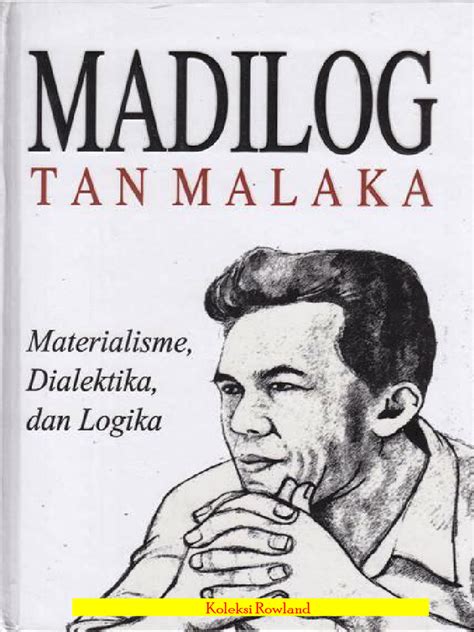
Madilog: Unpacking Its Meaning and LegacyReally, guys, have you ever stumbled upon a term that sounds super important, super profound, but leaves you scratching your head wondering, “What in the world does that even mean?” Well, for many,
Madilog
is exactly that kind of word. It’s a powerhouse concept, a cornerstone of critical thinking and revolutionary philosophy in Indonesian history, yet its true
Madilog meaning
often remains elusive to the uninitiated. Today, we’re going to dive deep and unravel this intriguing term, breaking down exactly what
Madilog stands for
and why it’s not just some old, dusty philosophy, but a vibrant framework that still offers immense value for anyone looking to understand the world more critically. We’ll explore its origins, the genius mind behind it, and how its principles of Materialism, Dialectics, and Logic come together to form a truly revolutionary way of thinking. So, buckle up, because by the end of this article, you’ll not only know what
Madilog
means, but you’ll also appreciate its lasting
legacy
and its continued relevance in our complex modern world. This isn’t just about memorizing an acronym; it’s about understanding a potent intellectual tool that has shaped, and continues to shape, perspectives far and wide. We’re talking about a genuine game-changer in philosophical thought, particularly within the context of Indonesian struggle for independence and self-determination. It’s a concept that demands our attention, inviting us to look beyond the surface and engage with reality in a much more profound and analytical way. The sheer depth of thought embedded within
Madilog
’s framework is something truly remarkable, offering a lens through which we can dissect societal issues, political landscapes, and even our own personal understanding of truth and progress. It’s a journey into the very essence of critical thought, and we’re just getting started. This initial dive will lay the groundwork for understanding why
Madilog
isn’t just a historical artifact, but a living, breathing set of ideas.## Who Coined Madilog? The Vision of Tan MalakaWhen we talk about
Madilog
, we absolutely have to talk about its brilliant creator, the legendary
Tan Malaka
. This isn’t just some random academic term; it’s the brainchild of one of Indonesia’s most fascinating, enigmatic, and arguably
underappreciated
national heroes. Born Ibrahim Sutan Datuk Tan Malaka in West Sumatra in 1897, he was a true revolutionary, an intellectual giant, and a relentless fighter for Indonesian independence. His life was a whirlwind of political activism, secret missions, imprisonment, and constant evasion from colonial authorities. Imagine living a life where you’re constantly on the run, using dozens of aliases, traveling across continents – from the Netherlands to the Soviet Union, from China to the Philippines – all while tirelessly advocating for the liberation of your homeland. That, my friends, was Tan Malaka.His magnum opus,
Madilog
, was written during a period of intense intellectual output and clandestine activity. It’s said he penned this groundbreaking work between 1942 and 1943, while in hiding in the Dutch East Indies during the Japanese occupation. Think about that for a second: writing a complex philosophical treatise under the most challenging circumstances, without proper resources, constantly fearing capture. It speaks volumes about his dedication and his intellectual prowess. Tan Malaka wasn’t just a political activist; he was a profound thinker who believed that true liberation required not just physical struggle, but also intellectual emancipation. He saw the need for Indonesians to develop a robust, scientific, and logical framework for understanding their own reality, moving beyond traditional, mystical, or colonial-imposed ways of thinking. This is where
Madilog
comes in. He wanted to provide a philosophical weapon, a guide for revolutionary action that was rooted in empirical observation and rational analysis. He argued that the Indonesian independence movement couldn’t simply rely on nationalist fervor; it needed a solid,
scientific methodology
to truly understand its opponents, its allies, and the path forward. Tan Malaka’s vision for
Madilog
was to equip the Indonesian people with the tools for critical thought, enabling them to dissect propaganda, challenge dogma, and build a future based on reason and progress. He envisioned a society capable of independent thought, unburdened by colonial mentalities or feudal superstitions. This commitment to intellectual rigor, even amidst the most chaotic political landscape, highlights why Tan Malaka’s contribution, especially through
Madilog
, remains so incredibly significant to this day. He wasn’t just offering a new philosophy; he was offering a new way of
seeing the world
for a nation struggling to find its own identity and freedom. His tireless efforts and intellectual depth truly make him a titan in Indonesian history, and understanding
Madilog
is key to understanding his enduring legacy.## Breaking Down the Acronym: What Each Part of Madilog Stands ForAlright, guys, let’s get to the nitty-gritty:
what does Madilog stand for
? It’s an acronym, a powerful shorthand for three fundamental philosophical concepts that, when combined, offer a unique and compelling worldview.
Madilog
is short for
Materialisme, Dialektika, Logika
– or in English, Materialism, Dialectics, and Logic. Each of these components is crucial, and together, they form a comprehensive framework for understanding reality, analyzing problems, and driving revolutionary change. Let’s unpack each one, because understanding their individual meanings is key to grasping the full power of
Madilog
.### Materialisme: Grounding Thought in RealityFirst up, we have
Materialisme
(Materialism). Now, before you jump to conclusions, this isn’t about being obsessed with money or possessions, guys. In a philosophical sense,
materialism
refers to the belief that
matter is the fundamental substance in nature, and that all phenomena, including mental life and consciousness, are results of material interactions
. Simply put, it asserts that the
physical world is primary
. This contrasts sharply with idealism, which posits that ideas or consciousness are fundamental. For Tan Malaka, embracing materialism meant rejecting supernatural explanations, mystical beliefs, and fatalistic worldviews that had often held back progress and critical thinking. He argued that to truly understand society, politics, and the challenges faced by the Indonesian people, one must analyze them based on concrete, observable facts and material conditions, rather than abstract spiritual notions or divine interventions.This focus on
material reality
was revolutionary because it pushed people to look at the tangible aspects of their existence: the economic structures, the distribution of wealth, the social classes, the means of production, and the actual living conditions of the populace. Instead of blaming poverty on fate or karma, materialism encourages us to examine the
material causes
– like colonial exploitation, unfair labor practices, or unequal resource distribution. It’s about grounding our analysis in empirical evidence and the physical world around us, ensuring that our solutions are practical and address the root causes of problems, not just the symptoms. Tan Malaka emphasized that a materialist approach provides a
scientific lens
for understanding history and societal development. It teaches us to seek rational, verifiable explanations for events, urging us to investigate the physical forces and circumstances that shape human experience. For him, this was a vital step towards intellectual independence and developing a
realpolitik
understanding of power and struggle. It’s about building a foundation of knowledge based on what we can see, touch, and measure, rather than what we might merely imagine or wish for. This pragmatic and empirical approach is what makes the ’M’ in
Madilog
so powerful and enduringly relevant.### Dialektika: Understanding Change and ContradictionNext, we have
Dialektika
(Dialectics). This is arguably the most dynamic and complex component of
Madilog
, and it’s super important, guys! Dialectics, at its core, is a method of understanding how things
change
and
develop
through
the interaction of opposing forces or ideas
. It posits that contradiction is inherent in nature and society, and that progress often emerges from the tension and resolution of these contradictions. Think of it like this: everything contains its opposite, and through their struggle, something new emerges. This isn’t just about arguments; it’s about a fundamental principle of movement and transformation.Tan Malaka adopted this concept, popularized by thinkers like Hegel and Marx, to analyze social and historical processes. He saw society not as static, but as constantly evolving through a series of conflicts and resolutions. For the Indonesian independence movement, this meant understanding the inherent contradictions within colonial rule – the colonizers’ need for resources versus the colonized people’s desire for freedom, the wealth of a few versus the poverty of the many. He taught that these contradictions inevitably lead to struggle, and that through this struggle, a new, higher form of society could emerge. It’s about seeing the world in
motion
, recognizing that stability is often an illusion, and that change is constant.Dialectics encourages us to look beyond simplistic, black-and-white thinking. It teaches us to identify the
thesis
(an idea or situation), its
antithesis
(the opposing force or contradiction), and how their interaction leads to a
synthesis
(a new outcome that incorporates elements of both, but is fundamentally different). This continuous process of thesis-antithesis-synthesis drives historical progress. For Tan Malaka, applying dialectics meant analyzing the historical trajectory of Indonesia, understanding the forces at play, and strategizing how to leverage contradictions to achieve independence. It’s about proactive engagement with change, not passive acceptance. It’s about recognizing that every system, every idea, every situation contains the seeds of its own opposition, and that understanding this dynamic is crucial for effective action. The
dialectical method
allows for a much richer and more nuanced understanding of the world, moving beyond rigid categories to embrace the fluid and interconnected nature of reality. This is a crucial intellectual tool for anyone seeking to understand and navigate complex social and political landscapes, making the ’D’ in
Madilog
a call to dynamic and critical engagement.### Logika: The Guiding Light of ReasonFinally, we come to
Logika
(Logic). While Materialism provides the foundation (what to observe) and Dialectics provides the method (how to understand change), Logic is the
tool for rational thought and coherent argumentation
. It’s about ensuring that our conclusions are sound, our reasoning is valid, and our analysis is consistent. Tan Malaka emphasized logic as the indispensable guide for revolutionary action and intellectual discourse. Without logic, even the most insightful materialist observations or dialectical analyses could devolve into muddled thinking, emotional appeals, or baseless assertions.Logic, in the context of
Madilog
, is about clarity, precision, and validity. It pushes us to develop arguments based on evidence, to identify fallacies in reasoning (both our own and our opponents’), and to construct a worldview that stands up to critical scrutiny. It’s about moving from premises to conclusions in a way that is intellectually defensible. For Tan Malaka, this was particularly vital for the independence movement. He argued that colonial powers often relied on illogical justifications, propaganda, and emotional manipulation to maintain control. By arming the Indonesian people with logic, he aimed to empower them to dismantle these deceptive narratives and present a clear, compelling case for self-determination based on reason and justice. It means asking tough questions: Is this statement consistent? Does this conclusion follow from the evidence? Are there hidden assumptions here? Applying logic rigorously helps to cut through confusion and arrive at clearer truths. It’s about building a robust intellectual framework where ideas are not just passionately held, but also logically sound. It serves as the ultimate arbiter, the check and balance for our understanding. The ‘L’ in
Madilog
therefore isn’t just about dry rules of inference; it’s about the active pursuit of intellectual honesty and the strategic application of sound reasoning to achieve concrete goals. It’s the compass that keeps our revolutionary journey on track, ensuring that our actions are guided by clear thought rather than blind faith or fleeting emotions.## The Core Philosophy of Madilog: A Unified FrameworkWhat makes
Madilog
truly groundbreaking, guys, isn’t just the individual strength of Materialism, Dialectics, and Logic, but how
Tan Malaka masterfully wove them together into a unified, coherent philosophical framework
. This wasn’t just a collection of ideas; it was a powerful synthesis, a dynamic system designed to empower revolutionary thought and action. Imagine these three concepts as gears in a well-oiled machine: Materialism gives you the raw data, the observable reality; Dialectics provides the engine for understanding how that reality changes and evolves through contradictions; and Logic is the control panel, ensuring that the engine runs efficiently and purposefully towards a desired outcome. For Tan Malaka, this meant developing a
scientific approach to revolution
.He passionately argued that an effective revolutionary movement couldn’t be based on mere emotion, traditional dogma, or blind idealism. Instead, it needed a rigorous, scientific methodology to analyze its own conditions, understand its enemies, identify opportunities, and strategize its path to victory.
Madilog
provided exactly that methodology. It pushed for an understanding of history and society that was grounded in concrete facts (materialism), recognized the dynamic interplay of opposing forces (dialectics), and was guided by clear, consistent reasoning (logic). This was a radical departure from many existing philosophical currents in Indonesia at the time, which often leaned on spiritualism, mysticism, or a passive acceptance of fate. Tan Malaka saw these as intellectual chains, hindering the ability of the Indonesian people to assert their agency and shape their own destiny.By integrating these three elements,
Madilog
offered a comprehensive tool for both analysis and action. It encouraged critical thinking that questioned authority, exposed exploitation, and imagined alternative futures. It wasn’t just about abstract contemplation; it was about
praxis
– the intelligent application of theory to practical action. For example, a
Madilog
-trained revolutionary wouldn’t just lament colonial poverty (a material condition); they would analyze the dialectical contradiction between colonial wealth extraction and local impoverishment, and then use logic to formulate a strategy to resolve that contradiction through independence. This systematic approach, this emphasis on empirical observation, dynamic analysis, and rational conclusion, is what made
Madilog
such a compelling and enduring philosophy. It offered a pathway to intellectual liberation, asserting that Indonesians possessed the intellectual capacity to understand and transform their own reality, without relying on external ideologies or colonial narratives. It instilled confidence in indigenous intellectual capabilities, presenting a robust framework for self-determination that transcended mere political slogans. This comprehensive and integrated approach truly highlights the genius of Tan Malaka, making
Madilog
a timeless guide for anyone seeking to understand and change the world.## Madilog’s Impact and Enduring Legacy in IndonesiaThe ripples of
Madilog
’s influence, guys, extend far beyond the pages of Tan Malaka’s original text. This wasn’t just a philosophy; it was a
call to intellectual arms
that profoundly shaped the discourse and direction of the Indonesian independence movement and beyond. Its impact on Indonesian thought, politics, and the broader struggle for self-determination is undeniable, even if its creator often remained in the shadows. Firstly,
Madilog
introduced a
rigorous scientific methodology
into Indonesian political thought. Before Tan Malaka, much of the anti-colonial rhetoric, while passionate and necessary, sometimes lacked a systematic analytical framework.
Madilog
provided that framework, teaching activists and intellectuals how to dissect colonial structures, analyze economic exploitation, and understand the historical forces at play with a level of precision and depth previously unseen. This encouraged a generation of thinkers to engage with reality in a more empirical and less idealistic way.Secondly, it empowered a sense of
intellectual independence
. By emphasizing materialism, dialectics, and logic, Tan Malaka implicitly challenged the intellectual hegemony of both colonial powers and traditional feudal structures. He suggested that Indonesians had the capacity, through
Madilog
, to develop their own understanding of the world, formulate their own solutions, and chart their own course, rather than blindly adopting foreign ideologies or adhering to outdated customs. This was a crucial step towards true self-governance, not just politically but intellectually.The
legacy of Madilog
also lies in its promotion of
critical thinking and skepticism
. In a society often influenced by dogma, superstition, or authoritarian narratives,
Madilog
’s insistence on logic and empirical evidence encouraged people to question, to verify, and to think for themselves. This was, and still is, a powerful antidote to propaganda and misinformation, fostering a citizenry capable of discerning truth from falsehood.Even though Tan Malaka himself was often marginalized and eventually executed, his ideas, particularly those encapsulated in
Madilog
, continued to circulate and influence various political factions and intellectual circles. While perhaps not always explicitly credited, the emphasis on understanding material conditions, recognizing contradictions, and employing logical reasoning became ingrained in various forms of Indonesian activism and scholarly work. Its principles offered a robust analytical tool for understanding power dynamics, societal evolution, and the path towards justice and equity. The historical significance of
Madilog
cannot be overstated; it provided a unique, indigenous framework for critical analysis that resonated deeply with the aspirations of a nation striving for freedom and self-determination. It cultivated a mindset of inquiry and problem-solving that went beyond superficial observations, encouraging a deeper engagement with the complexities of social and political realities. This profound intellectual contribution firmly establishes
Madilog
’s place as a cornerstone in the tapestry of Indonesian thought.## Why Madilog Still Matters in Modern TimesAlright, let’s bring it home, guys. You might be thinking, “This Madilog stuff sounds cool for history buffs, but
why does Madilog still matter
in our super-fast, tech-driven modern world?” And that’s a fair question! But I’m here to tell you that the principles of
Madilog
are not just relics of the past; they are
incredibly relevant and powerful tools for navigating the complexities of the 21st century
. In fact, in an era of information overload, fake news, and increasingly complex global challenges, a
Madilog
-informed approach can be your secret weapon for critical thinking and effective problem-solving.First off, the emphasis on
Materialisme
is more important than ever. In a world where narratives are often shaped by powerful interests and where digital realities can sometimes overshadow tangible issues,
Madilog
reminds us to always
ground our analysis in concrete, observable facts and material conditions
. When we’re bombarded with abstract economic theories or political rhetoric,
Madilog
nudges us to ask: What are the actual economic conditions of people? Who benefits materially from this policy? What are the physical resources at stake? This helps us cut through the noise and focus on what truly impacts lives.Secondly,
Dialektika
offers an invaluable lens for understanding the rapid and often contradictory changes we face today. Our world is constantly in flux, marked by global tensions, technological disruptions, and evolving social dynamics.
Madilog
’s dialectical approach teaches us to see these changes not as isolated events, but as part of a larger, ongoing process of interaction between opposing forces. It helps us anticipate trends, understand conflicts (like the push-pull between globalization and nationalism, or between technological progress and ethical concerns), and recognize that solutions often emerge from the synthesis of conflicting ideas. This dynamic way of thinking is crucial for innovation and adaptability in a world that never stands still.Finally, and perhaps most critically,
Logika
provides the essential framework for
rational decision-making and intellectual honesty
in an age of rampant misinformation. With social media and echo chambers, it’s easier than ever to fall into illogical traps, embrace conspiracy theories, or simply stop thinking critically.
Madilog
reminds us to rigorously apply logic to every argument, to question assumptions, identify fallacies, and demand evidence. It’s about cultivating a mindset that values clear reasoning over emotional appeals, and truth over convenience. This isn’t just about winning debates; it’s about building a more informed, resilient, and just society.So, whether you’re analyzing political events, understanding market trends, evaluating scientific claims, or even just making personal life choices, the integrated framework of
Madilog
offers a robust methodology. It encourages us to be active, engaged thinkers who don’t just consume information, but critically process it, understand its underlying dynamics, and logically derive meaningful insights. Its applicability transcends its original historical context, serving as a powerful intellectual toolkit for anyone committed to understanding and positively shaping their modern world. It’s about empowering individuals to see through complexity, make informed judgments, and contribute to progress, making the study of
Madilog
a truly relevant endeavor for today and tomorrow.## Conclusion: The Enduring Power of MadilogSo, there you have it, guys – a deep dive into
Madilog: Unpacking Its Meaning and Legacy
. We’ve journeyed from scratching our heads about
what Madilog stands for
to understanding its profound philosophical underpinnings and its continued relevance. We’ve seen how Tan Malaka, a true revolutionary and intellectual giant, crafted this powerful framework of
Materialisme, Dialektika, and Logika
not just as an academic exercise, but as a practical, scientific tool for liberation. We discovered that Materialism grounds our understanding in the observable, tangible world, pushing us to look at concrete facts rather than abstract notions. Dialectics provides the dynamic lens through which we comprehend change, contradiction, and the relentless march of progress. And Logic serves as our indispensable guide, ensuring our thoughts are clear, our arguments sound, and our actions purposeful. Together, these three pillars form a robust system for critical thinking that goes beyond simple observation, inviting us to dissect, analyze, and strategically engage with the world around us.The impact of
Madilog
on Indonesian thought and the independence movement was immense, offering a unique, indigenous approach to understanding and transforming society. And its legacy, far from being confined to history books, continues to resonate today, providing a crucial framework for navigating the complexities of our modern world. In an age demanding sharp minds and critical analysis, the principles embedded in
Madilog
offer a powerful antidote to superficiality and misinformation. So, the next time you hear someone mention
Madilog
, you won’t just know what it means; you’ll understand the profound philosophical journey it represents – a journey towards intellectual independence, rigorous analysis, and a relentless pursuit of truth and progress. It’s a call to think deeply, act strategically, and always, always question the status quo. What a ride, right? Keep thinking critically, guys! This framework isn’t just about knowing; it’s about
doing
and
becoming
a more informed and empowered individual. Its enduring value lies in its ability to equip us with the intellectual courage and clarity needed to confront challenges and forge a better future, making
Madilog
an evergreen source of inspiration and insight.
