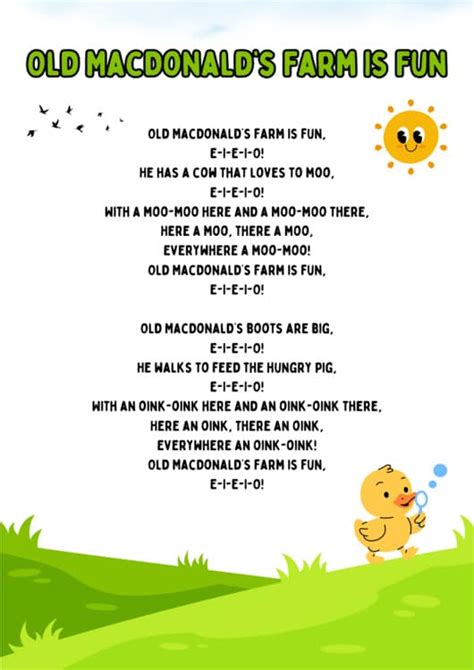
Old MacDonald’s Farm Song: Fun & Learning for Kids Guys, let’s talk about one of the
most beloved and enduring
children’s songs out there:
Old MacDonald’s Farm Song
. This classic tune has been enchanting kids and parents alike for generations, and for good reason! It’s not just a catchy melody; it’s a vibrant, interactive journey into the world of farm animals, making it an
invaluable tool
for early childhood development. When you think about songs that instantly bring a smile to a child’s face,
Old MacDonald
is definitely at the top of the list. Its simplicity, repetitive structure, and the fun of mimicking animal sounds make it an
irresistible favorite
. We’ve all sung it, we’ve all loved it, and its magic continues to captivate new audiences every single day. So, what makes this specific song so
special
and
universally adored
? Let’s dive deep into its history, its widespread cultural impact, and why little ones just can’t get enough of this fantastic farm adventure. It’s more than just a song; it’s a cultural touchstone. ## The Timeless Appeal of Old MacDonald’s Farm Song ### A Journey Through Its History and Cultural Impact The
history of Old MacDonald’s Farm Song
is actually quite fascinating, guys! While its exact origins are a bit fuzzy, similar tunes and verses can be traced back to
traditional folk songs
from various European countries. Some musicologists suggest its roots might go as far back as the 18th century, evolving through oral tradition before it became the version we know and love today. What’s truly remarkable about
Old MacDonald Had a Farm
is its incredible journey across different cultures and languages. It’s been translated and adapted into countless versions worldwide, from “Viejo MacDonald Tenía una Granja” in Spanish to “Onkel Jens Hadde en Gård” in Danish, proving its
universal appeal
and adaptability. This global reach highlights its fundamental human connection to nature and animals. This isn’t just a simple children’s ditty; it’s a
global phenomenon
that transcends geographical and linguistic barriers. Its consistent presence in children’s media, from animated shows to educational programs, has cemented its place as a
pillar of early childhood entertainment
.
Think about it
, how many times have you heard it playing in a classroom, at a birthday party, or even just humming along in your head? This song isn’t just about animals; it’s about the
joy of shared experience
and the simple pleasure of a catchy tune. It’s a powerful testament to how music can connect people, particularly young children, to fundamental concepts and shared cultural experiences. The cultural impact of
Old MacDonald’s Farm Song
can’t be overstated. It’s not just a song; it’s a
rite of passage
for many children, a shared memory for families, and a foundational piece of early education. Its ubiquitous nature ensures that generations continue to grow up with the familiar sounds of “E-I-E-I-O.”
Truly, this song is a masterpiece of children’s entertainment, constantly reinventing itself while staying true to its core charm.
### Why Kids Love Singing Along to Old MacDonald So,
why exactly do kids absolutely adore singing along to Old MacDonald’s Farm Song
, you ask? Well, there are several key ingredients to its irresistible charm, guys. Firstly, its
repetitive and predictable structure
is pure gold for young minds. Children thrive on familiarity and routine, and the consistent “Old MacDonald had a farm, E-I-E-I-O” refrain provides a comforting anchor. This predictability allows them to easily
memorize the lyrics
and anticipate what comes next, boosting their confidence and engagement. Secondly, the
interactive element
is a huge draw. The song encourages active participation through
imitating animal sounds
. From a loud “moo moo” to a playful “oink oink,” kids get to be creative and expressive, bringing the farm animals to life with their own voices. This isn’t just passive listening; it’s an
active, engaging experience
. Thirdly, the
ever-changing parade of farm animals
keeps things fresh and exciting. Each verse introduces a new creature, allowing for endless possibilities and extending the song’s playability. This variety prevents boredom and keeps children eager to discover which animal will appear next.
It’s like a mini-adventure in every verse!
The simple, straightforward language and rhythmic melody are also perfectly pitched for young children, making it easy to follow along even for toddlers just starting to speak. The upbeat tempo and cheerful nature of the song naturally make children
want to move and dance
, adding a physical dimension to the fun. Lastly, the
social aspect
of singing
Old MacDonald’s Farm Song
together is incredibly important. Whether it’s in a classroom, at home with family, or with friends, sharing this song creates a
sense of community and shared joy
. It allows kids to connect with others through a common, enjoyable activity. These combined factors – repetition, interactivity, variety, simplicity, and social engagement – create a powerful,
all-encompassing experience
that makes
Old MacDonald
a perennial hit with the younger crowd. It’s simply
perfectly designed
for their developmental stage and innate desire for playful exploration. ## Unlocking Learning Opportunities with Old MacDonald Beyond being just a fun tune,
Old MacDonald’s Farm Song
is a powerhouse of
learning opportunities
, folks. This isn’t just about entertainment; it’s a cleverly disguised educational tool that helps children develop a wide array of cognitive and social skills. Educators and parents often praise this song for its
versatility
in teaching fundamental concepts in a playful and engaging manner. From language acquisition to fostering imaginative thinking, the song provides a rich platform for early development. Let’s explore some of the specific ways this incredible farm song helps our little ones grow and learn, turning every sing-along session into a valuable lesson. ### Boosting Language and Vocabulary Skills When it comes to
boosting language and vocabulary skills
, guys,
Old MacDonald’s Farm Song
is an absolute champion. The repetitive nature of the song, with its consistent structure, helps children
pick up new words and phrases
much more easily. Each verse introduces a new animal and its corresponding sound, directly
expanding their vocabulary
in a fun and memorable way. Think about it: they’re not just learning “cow” but also “moo,” and understanding the association between the two. This
pairing of object and sound
is a fundamental step in language acquisition. Furthermore, the song encourages children to
articulate different sounds
, which is crucial for developing clear speech. Mimicking the animal noises helps strengthen their mouth and tongue muscles, improving their
phonological awareness
. For toddlers and preschoolers, this practice is invaluable for preparing them for more complex speech patterns. Parents and teachers can enhance this learning by
pointing to pictures
of the animals as they sing, or by using
real animal toys
, further solidifying the connection between the word, the sound, and the visual representation. This multi-sensory approach makes the learning experience even more effective and engaging. The song also introduces the concept of
counting and sequencing
implicitly as different animals are introduced one by one. Asking “What animal comes next?” encourages predictive thinking and attention. By actively participating in the song, children are constantly processing information, associating new words with familiar concepts, and practicing their verbal skills in a low-pressure, enjoyable environment. The call-and-response nature, especially when sung in a group, also builds
conversational turn-taking skills
, an essential component of social communication. It’s truly
remarkable
how much linguistic development can stem from such a seemingly simple song. This song provides a
rich linguistic environment
that is both entertaining and incredibly effective for language development, proving that learning doesn’t always have to feel like “work.” ### Exploring Animal Sounds and Recognition Another fantastic learning opportunity embedded in
Old MacDonald’s Farm Song
is its brilliant capacity for
exploring animal sounds and recognition
, guys. This song serves as a child’s first, fun introduction to the diverse world of farm animals and the unique noises they make. From the iconic “oink oink” of the pig to the gentle “baa baa” of the sheep, children learn to
identify and associate
specific sounds with their respective creatures. This isn’t just about rote memorization; it’s about developing an
understanding of the natural world
and the characteristics of different animals. For young children, accurately mimicking these sounds is a thrilling accomplishment that
boosts their confidence
and encourages further exploration. The song provides a perfect framework for teaching animal identification. You can extend this learning by showing flashcards, reading picture books about farm animals, or even visiting a petting zoo or a real farm. Seeing and interacting with the actual animals, after singing about them, creates a
powerful and lasting learning experience
.
Think about it
: when a child hears a real cow moo after learning about it in the song, that connection is incredibly strong and memorable. This recognition skill is foundational for later categorization and understanding of biological concepts. Moreover, the interactive nature of the song encourages children to
listen attentively
and
differentiate between sounds
. They learn to distinguish a duck’s “quack” from a horse’s “neigh,” which refines their auditory discrimination skills. These are critical pre-reading skills, as they involve recognizing differences in sounds, which later translates to recognizing different letter sounds. By making learning about animals and their sounds so engaging and accessible,
Old MacDonald’s Farm Song
lays a solid groundwork for broader scientific and natural world comprehension. It’s a wonderful way to introduce basic zoology in a
playful, unforgettable way
that truly resonates with young learners. The
sheer joy
children express when they correctly identify an animal sound is a testament to the song’s effectiveness. ### Encouraging Creativity and Imaginative Play Beyond just language and animal recognition,
Old MacDonald’s Farm Song
is an
amazing catalyst for encouraging creativity and imaginative play
, folks. This song isn’t just meant to be sung; it’s an invitation to
step into a vibrant farm world
and create your own stories and scenarios. As children sing along, they naturally begin to visualize the farm:
Old MacDonald
himself, the bustling barn, the fields where the animals roam. This active visualization is a crucial component of
imaginative development
. The open-ended nature of the song—where you can introduce any animal you want—sparks incredible creative thinking. Kids aren’t limited to just a cow or a pig; they can bring in a dinosaur, a unicorn, or even a talking robot, and make up new sounds! This flexibility fosters a sense of
ownership and agency
over the song, empowering them to be the creators of their own farm narrative. You can easily extend this into pretend play: set up a toy farm with animal figures, or even just use household items as props. Encourage kids to act out the song,
mimicking the animals’ movements
as well as their sounds. They might waddle like a duck, trot like a horse, or shuffle like a chicken. This physical embodiment of the song promotes
gross motor skills
and
body awareness
, while also deepening their imaginative engagement. The song also provides a fantastic jumping-off point for
storytelling
. After singing, you can ask questions like, “What happened next on Old MacDonald’s farm?” or “What did the cow say to the duck?” These prompts encourage children to
develop narratives
, create characters, and think critically about cause and effect within a playful context. Group singing sessions transform into collaborative storytelling adventures, where each child contributes to the collective farm fantasy. By providing a simple, beloved framework,
Old MacDonald’s Farm Song
becomes a canvas for endless
creative expression
and
imaginative exploration
. It’s truly a wonderful tool for nurturing those vital sparks of creativity in young minds, proving that sometimes, the simplest songs offer the richest opportunities for imaginative growth. ## Creative Ways to Enjoy Old MacDonald’s Farm Song Alright, guys, you’re convinced that
Old MacDonald’s Farm Song
is more than just a catchy tune, right? Now, let’s talk about some
super fun and creative ways
to bring this classic song to life and maximize its impact on your little ones. Simply singing it is great, but there are so many
interactive and engaging activities
you can incorporate to make the experience even richer and more memorable. These ideas go beyond just the verbal aspect, integrating movement, crafting, and even story-time, turning a simple song into a
full-fledged multi-sensory adventure
. Get ready to unleash your inner farm animal and have a blast! ### Interactive Singing and Movement Ideas To truly make
Old MacDonald’s Farm Song
an unforgettable experience, guys, let’s inject some
interactive singing and movement ideas
into your routine! Don’t just sit there; get up and move! Encourage children to
mimic the actions
of each animal as they sing its sound. For instance, when singing about the cow, they can gently sway side to side while making a “moo.” For the pig, they might wiggle their nose and make a “oink.” The duck can involve a waddle and a “quack,” while the horse can be a stomping “neigh.” These
physical movements
not only make the song more engaging but also help develop
gross motor skills
, coordination, and body awareness. You can turn it into a game: “Can you move like a chicken?” or “Show me your best sheep impression!” Another fantastic idea is to incorporate
fingerplay or simple hand gestures
for each animal. For example, flapping hands for a bird, or wiggling fingers for a worm (even if it’s not a traditional farm animal, it adds a fun twist!). This helps with
fine motor skill development
and adds another layer of sensory engagement. For a group setting, consider using
scarves or ribbons
to represent different animal movements. Children can wave a blue scarf for a duck swimming or a brown scarf for a horse galloping. This adds a visual and tactile element that enhances the experience. You can also vary the tempo and volume: sing a verse
fast and loud
for an excited animal, then
slow and quiet
for a sleepy one. This introduces concepts of musical dynamics and keeps things dynamic. The goal here is to transform passive listening into
active, full-body participation
, making the learning deeper and the fun factor off the charts. By bringing movement into the mix, you’re not just teaching a song; you’re creating a
dynamic, joyful, and multi-faceted learning environment
that perfectly suits the energy and developmental needs of young children.
It’s about making learning an adventure!
### Crafting Farm Animal Puppets and Props Let’s get crafty, folks!
Crafting farm animal puppets and props
is an absolutely brilliant way to enhance the
Old MacDonald’s Farm Song
experience, turning a simple sing-along into a
hands-on, creative adventure
. Imagine the excitement as your little one holds up a pig puppet they
personally made
while singing “oink oink”! This activity not only adds a visual dimension to the song but also provides a fantastic opportunity for
fine motor skill development
, creativity, and self-expression. You don’t need fancy materials either. Simple
paper plate animals
are a classic: kids can paint, glue yarn for hair, cotton balls for sheep wool, or even add googly eyes to create their favorite farm creatures. Attach a popsicle stick to the back, and
voilà
, you have an instant puppet!
Sock puppets
are another easy and fun option; just grab an old sock, some felt, buttons, and glue, and you can bring a cow or a chicken to life. Even simpler, print out pictures of farm animals, glue them onto cardboard, and cut them out to create
stick puppets
. As you sing each verse, the corresponding puppet can “appear,” making the song more interactive and visual. This visual aid is especially helpful for younger children who are still learning animal names and sounds. Beyond puppets, consider creating other
simple props
. A small toy barn made from a shoebox, or even just drawing a farm scene on a large piece of paper, can provide a backdrop for the animal puppets. Kids can also draw their own
Old MacDonald
character. The process of
making these props
is just as valuable as using them. It encourages children to follow instructions, practice cutting and gluing, and make creative choices about colors and textures. It also gives them a sense of
ownership over their learning
and play. When they use their handmade props during the song, they feel a deeper connection and pride in their work. This combination of
art and music
creates a truly immersive and educational experience that stays with them long after the song ends. It’s an
unbeatable way
to foster artistic expression while reinforcing the themes of the beloved farm song. ### Integrating the Song into Storytime and Playdates Guys, *integrating
Old MacDonald’s Farm Song
into storytime and playdates* is a fantastic strategy to make these occasions even more engaging and educational! This classic tune isn’t just for a quick sing-along; it can be a
powerful catalyst for structured play, social interaction, and expanded learning
. During storytime, you can use the song as a
warm-up activity
to get everyone energized and focused before diving into a book. Or, if you’re reading a book about farm animals, the song becomes a
perfect companion piece
, reinforcing the concepts and vocabulary introduced in the story. After reading about a particular animal, you can immediately launch into the relevant verse of
Old MacDonald
, making the connection explicit and memorable. For playdates,
Old MacDonald
can be the
central theme
for a whole afternoon of fun. Start by singing the song together, perhaps using some of the interactive movement ideas or puppets we discussed. Then, you can transition into
free play
centered around a farm theme. Lay out some farm animal toys, building blocks to construct a barn, or even dress-up clothes to turn kids into farmers or animals. The song provides a
shared context
that encourages collaborative play. Children might spontaneously re-enact parts of the song with their toys, or create their own extended farm stories. You can also incorporate the song into
craft activities
during a playdate, like making the animal puppets. The song serves as a constant, gentle reminder of the theme, keeping everyone engaged. Moreover, using the song in these social settings helps children develop
important social skills
. They learn to take turns, listen to others, and cooperate in a group activity. Singing together fosters a sense of
belonging and shared joy
, which is essential for healthy social development. It can also be a wonderful
ice-breaker
for shy children on a playdate, providing a familiar and comfortable activity that encourages participation. By thoughtfully weaving
Old MacDonald’s Farm Song
into storytime and playdates, you’re not just filling time; you’re creating
rich, multi-faceted learning experiences
that are both incredibly fun and deeply beneficial for young minds. It’s a simple song with
profound potential
for enriching children’s social and cognitive worlds. ## The Enduring Legacy of Old MacDonald’s Farm After exploring all the fun and learning opportunities, it’s clear that
Old MacDonald’s Farm Song
holds a truly
special place
in our hearts and in the world of early childhood education, guys. Its
enduring legacy
isn’t just a matter of nostalgia; it’s a testament to its powerful ability to connect with children on multiple levels, fostering development and creating cherished memories. This song has transcended generations, proving its
timeless relevance
and continued importance in homes and classrooms around the globe. It’s more than just a melody and some animal sounds; it’s a foundational piece of childhood, carrying with it a wealth of benefits that continue to unfold. ### How It Fosters Parent-Child Bonding One of the most
beautiful aspects
of
Old MacDonald’s Farm Song
, folks, is
how effectively it fosters parent-child bonding
. There’s something truly magical about a parent and child singing this classic tune together. The shared experience of making silly animal sounds, laughing, and moving to the rhythm creates
precious moments of connection
that build strong emotional ties. When you sing with your child, you’re not just entertaining them; you’re engaging with them on a deep, interactive level. This interaction sends a clear message of love, attention, and shared joy.
Think about those moments
: sitting on the floor, making a “quack quack” together, or seeing your child’s eyes light up when you start a new verse. These are the
building blocks of a strong relationship
. The repetitive nature of the song provides a comfortable routine, which can be particularly soothing for young children and creates a
predictable, safe space
for interaction. It’s a simple, low-pressure activity that both parent and child can participate in equally, without any need for special equipment or complex rules. Furthermore, the act of singing together releases endorphins, creating a
positive feedback loop
that strengthens emotional bonds. It’s a shared creative outlet that encourages warmth, affection, and mutual enjoyment. For busy parents, taking just a few minutes to sing
Old MacDonald’s Farm Song
can be a wonderful way to
reconnect and de-stress
, refocusing on the simple joys of parenthood. These shared musical experiences become
cherished memories
that children will carry with them for years, associating the song with comfort, love, and the special bond they share with their parents. It truly is a
powerful tool for nurturing family connections
, proving that sometimes the simplest activities yield the most profound results. ### Its Place in Early Childhood Education Beyond the home,
Old MacDonald’s Farm Song
holds an
invaluable and well-deserved place in early childhood education
, guys. Educators worldwide recognize its immense potential as a
multifaceted teaching tool
that supports various developmental domains. In preschools and kindergartens, it’s often one of the first songs introduced, serving as a
foundation for musical literacy
and group participation. Teachers use it to facilitate
language development
, helping children learn new vocabulary, practice articulation, and develop phonological awareness through animal sounds. The interactive nature of the song makes it perfect for
circle time
, encouraging children to listen, take turns, and engage with their peers. This fosters essential
social skills
like cooperation and communication. Moreover, the song’s themes readily lend themselves to
thematic units on farm life
, animals, and nature, integrating seamlessly into broader curriculum goals. It’s an excellent way to introduce basic biological concepts in a way that is
accessible and exciting
for young learners. The actions and movements associated with the song also contribute to
gross motor skill development
and body awareness, turning a learning activity into a fun physical exercise. For children with diverse learning styles, the song offers
multi-sensory engagement
: auditory through singing, visual through imagining animals, and kinesthetic through movement. This makes it an
inclusive teaching resource
that can benefit a wide range of learners. It can also be adapted for children with special needs, offering a predictable structure and opportunities for repetition that are often highly beneficial. The joy and enthusiasm children display when singing
Old MacDonald’s Farm Song
also highlight its role in creating a
positive and engaging learning environment
. When children are having fun, they are more receptive to learning and more likely to retain information. Thus, it’s not just a song; it’s a
pedagogical cornerstone
that continues to enrich and enliven early childhood education, proving its
timeless value
in helping young minds flourish. ## Frequently Asked Questions about Old MacDonald’s Farm Song ### Q1: What is the primary message or theme of Old MacDonald’s Farm Song? A: The primary message of
Old MacDonald’s Farm Song
, guys, is centered around
introducing young children to farm animals and the sounds they make
. It’s a celebration of farm life, promoting
animal recognition
and
auditory discrimination
. Beyond that, it also subtly teaches about routine, repetition, and the joy of interactive play. It’s really about the simple, everyday wonders of a farm and the creatures that inhabit it, presented in a fun, engaging, and highly accessible format for little ones. The song’s core theme is one of
discovery and playful learning
within an agricultural setting, fostering a basic understanding of where some of our food comes from and the animals involved. ### Q2: How does Old MacDonald’s Farm Song aid in a child’s development? A:
Old MacDonald’s Farm Song
is a powerhouse for child development, folks! It significantly aids in
language and vocabulary development
by introducing animal names and sounds. It boosts
auditory processing skills
as children differentiate between sounds. Its repetitive structure helps with
memory and sequencing
. The interactive elements encourage
gross and fine motor skills
through actions and gestures. Moreover, it sparks
creativity and imaginative play
, and in group settings, it fosters crucial
social-emotional skills
like turn-taking and cooperation. It’s an
all-around developmental tool
disguised as pure fun! ### Q3: Can Old MacDonald’s Farm Song be modified for different ages or learning levels? A: Absolutely, guys!
Old MacDonald’s Farm Song
is incredibly
adaptable
. For younger toddlers, you can focus on just a few animals and very simple sounds. For preschoolers, you can introduce more animals, encourage complex actions, or even have them invent their own animal verses (e.g., “Old MacDonald had a zoo!”). You can also incorporate different languages, use puppets or props, or vary the tempo and volume to keep it challenging and engaging for various
learning levels
. Its versatility is one of its greatest strengths in educational settings!
It’s truly a song that grows with the child.
### Q4: Are there any similar educational songs to Old MacDonald’s Farm Song? A: Yes, there are several wonderful *educational songs similar to
Old MacDonald’s Farm Song
! Some popular ones include “The Wheels on the Bus,” which focuses on transportation and actions; “If You’re Happy and You Know It,” which encourages emotional expression and movement; and “Twinkle, Twinkle Little Star,” which helps with early language and rhythm. Songs like “BINGO” also use repetition and introduce letter recognition. These songs, like
Old MacDonald
, are fantastic because they combine catchy melodies with
clear educational objectives
in an engaging, child-friendly format, making learning fun and accessible for young learners.
