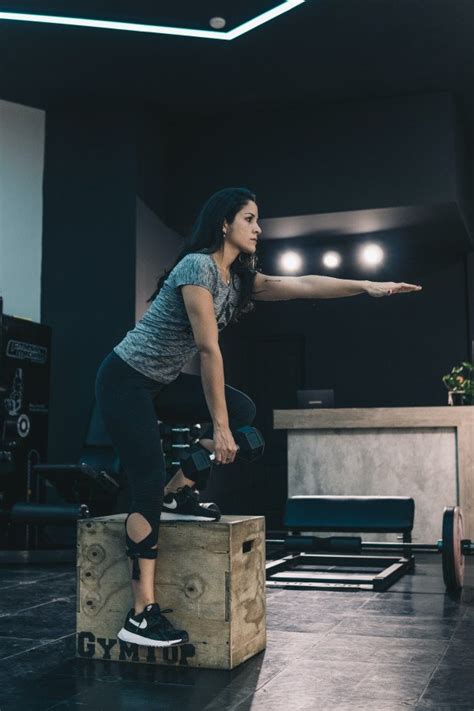
Weighted Step-Ups: Boost Legs & Glutes Effectively\n\n## What Are Weighted Step-Ups and Why You Need ‘Em!\nHey there, fitness fanatics! Ever felt like your lower body workouts could use a serious kick? Well,
guys
, let me introduce you to the unsung hero of leg day:
Weighted Step-Ups
. This exercise is an absolute powerhouse, combining strength, balance, and functional movement all into one killer package. Essentially, a
weighted step-up
involves stepping onto an elevated surface, like a sturdy bench or a plyo box, while holding some form of resistance—think dumbbells, kettlebells, or even a barbell across your shoulders. It’s not just about lifting yourself up; it’s a meticulously controlled, unilateral movement that
targets
and
activates
those crucial lower body muscles in a way that many bilateral (two-legged) exercises simply can’t. If you’re serious about building impressive leg strength, enhancing glute activation, and improving your overall unilateral training capabilities, then paying close attention to this exercise is an absolute must-do for your routine. It demands focus, precision, and truly engages your muscles from top to bottom.\n\nThis isn’t just another run-of-the-mill movement; it’s a
game-changer
for anyone looking to seriously sculpt their legs and glutes while also boosting real-world functionality. Unlike squats or deadlifts, which work both legs simultaneously,
weighted step-ups
challenge one leg at a time. This unilateral focus is incredibly valuable because it helps identify and correct muscle imbalances between your left and right sides, leading to more symmetrical strength, improved stability, and a significantly reduced risk of injury.
Seriously
, think about how often you rely on one leg for everyday tasks – climbing stairs, running, jumping, or even just walking across uneven terrain. Training your body in this manner directly translates to better performance in daily life and various sports, making you a more capable and efficient human being. The constant engagement required to stabilize your body on one leg also means your core gets a fantastic, often unexpected, workout, adding an extra layer of benefit that supports your entire kinetic chain. We’re talking about a comprehensive lower-body exercise that demands coordination, control, and serious muscle effort, making it indispensable for a well-rounded fitness regimen. So, get ready to embrace the burn and transform your lower body with the incredible power of
weighted step-ups
! You’ll thank me later,
promise
.\n\n## The Core Benefits: Unleashing Your Lower Body Potential\nLet’s dive deep into
why
weighted step-ups
are such a phenomenal exercise,
guys
. The benefits extend far beyond just looking good; they contribute significantly to your overall strength, athletic performance, and even injury prevention. First off, for
muscle growth
, especially in your quads, hamstrings, and
especially
your glutes, step-ups are incredibly effective. Because you’re working one leg at a time, each muscle group has to work harder to stabilize and propel your body upwards. This intense, isolated effort can lead to superior muscle fiber recruitment and, ultimately, more significant hypertrophy. Your glutes, for instance, get an
epic
squeeze at the top of the movement, which is fantastic for building that strong, sculpted posterior chain everyone talks about.
Don’t underestimate the glute activation here!
\n\nBeyond just building muscle,
weighted step-ups
are
champions
for
improving balance and stability
. When you’re balancing on one leg on an elevated surface while holding weights, your body’s smaller stabilizer muscles go into overdrive. This constant micro-adjustment to maintain equilibrium directly translates to better balance in everyday activities and sports. Think about how much more stable you’ll feel on uneven terrain or during dynamic movements. This improved proprioception is crucial for injury prevention, as a stronger, more stable base means you’re less likely to twist an ankle or suffer a fall. Furthermore, if you’re an athlete, these
functional benefits
are immense. They mimic movements common in running, jumping, and various sports, directly enhancing your
athletic performance
. You’ll notice better explosiveness, agility, and overall coordination. Lastly, the
core engagement
in
weighted step-ups
is often overlooked. Your abdominal and lower back muscles work continuously to keep your torso upright and stable, preventing unwanted rotation or leaning. This makes it a fantastic functional exercise that strengthens your entire kinetic chain, from your feet right up to your core.
Seriously, what’s not to love about an exercise that gives you strong legs, powerful glutes, better balance, and a more stable core?
It’s a full-package deal for lower body mastery!\n\n## Mastering the Movement: Your Step-by-Step Guide to Perfection\nAlright,
guys
, let’s get down to brass tacks:
mastering the movement
for
weighted step-ups
is absolutely crucial for both safety and effectiveness. You want to make every rep count, right? First things first, choose your elevated surface. A sturdy bench or a plyo box that allows your thigh to be roughly parallel to the ground when your foot is on it is ideal.
Too high, and you risk injury; too low, and you diminish the challenge
. Stand facing the bench, holding your weights (dumbbells in each hand, a kettlebell racked, or a barbell on your back – we’ll talk more about equipment later). Begin by placing one entire foot firmly on the center of the bench.
This is key
: make sure your whole foot is planted, not just your toes, to ensure maximum stability and power generation.\n\nNow, with your core tight and chest up, drive through the heel of your elevated foot, pushing your body upwards until your standing leg is fully extended at the top of the bench.
Imagine pushing the bench away from you with your foot.
The goal is to avoid pushing off with your bottom leg; that leg should simply follow along. At the top, bring your trailing leg up so it’s hovering, or gently tap the bench without resting your weight on it.
This ensures continuous tension on your working leg
. Slowly and with control, lower yourself back down, leading with the same leg that just stepped up. The descent should be just as controlled as the ascent, resisting gravity rather than just dropping. Aim for a smooth, deliberate movement, focusing on the eccentric (lowering) phase, which is fantastic for muscle building. Once your initial foot is back on the ground, you can either alternate legs or complete all reps on one side before switching.
Consistency in form is your best friend here.
\n\nNow, let’s talk about
common mistakes to avoid
when performing
weighted step-ups
. The biggest culprit is using too much momentum or pushing off with the trailing foot.
Resist that urge, guys!
The power should come entirely from the working leg. Another mistake is leaning too far forward or backward; keep your torso relatively upright to engage your core and protect your back. Also, avoid choosing a bench that’s too high, which can put undue stress on your knee and lower back, or too low, which won’t give you enough range of motion.
Proper form truly dictates your gains and safety.
Lastly, don’t let your knee cave inward on the working leg; keep it tracking over your toes. By paying meticulous attention to these details, you’ll unlock the full power of
weighted step-ups
and see incredible results in your lower body strength and development. You’ve got this!\n\n## Choosing Your Weapon: Equipment & Weight Selection\nAlright,
fitness warriors
, let’s talk gear! When it comes to
weighted step-ups
, one of the coolest things is how versatile they are with different types of equipment. This means you can easily tailor the exercise to your current fitness level and the equipment you have access to. The most common and often easiest starting point is with
dumbbells
. Holding a dumbbell in each hand, down by your sides, is a great way to add resistance without compromising your balance too much, especially when you’re first getting the
step-up technique
down. It allows for a natural arm swing and keeps your center of gravity relatively low, which is
super helpful
for stability. As you get stronger, you can increase the weight of the dumbbells, or even hold a single heavier dumbbell in the goblet position for a different challenge.\n\nNext up, we have
kettlebells
. These babies offer a slightly different feel. You can hold one kettlebell in a goblet position, similar to a goblet squat, which places the weight closer to your core and increases the core stability challenge. Alternatively, you can hold two kettlebells, one in each hand, just like with dumbbells. The unique weight distribution of kettlebells can sometimes feel a bit more dynamic and engaging for your stabilizing muscles. For the
really strong and adventurous
,
barbell step-ups
are an option. This is where things get serious! With a barbell across your upper back, like in a squat, the load is much higher, and the balance requirement goes through the roof.
This variation is not for beginners
, and often requires a spotter or a very secure rack setup. It’s a fantastic way to overload your legs, but prioritize form and safety above all else with barbells.\n\nBeyond traditional free weights, you could also use a
weight vest
. This distributes the weight evenly across your torso, which can be a fantastic way to add resistance without having to hold anything in your hands, freeing them up for balance or other movements. When it comes to
weight selection
, my advice is always to
start light and focus on perfect form
. Seriously,
guys
, there’s no ego in the gym; it’s all about effective training. Pick a weight that allows you to complete your desired reps (e.g., 8-12 reps per leg) with excellent control, especially during the lowering phase. Once you can comfortably perform all your reps with perfect form,
then
it’s time for
progressive overload
– gradually increasing the weight, reps, or challenging the exercise with a higher box. Remember, the goal is always quality over quantity to maximize your gains and prevent injury. Choose your weapon wisely and prepare to feel the burn!\n\n## Programming Your Success: Sets, Reps, and Integration\nSo, you’ve nailed the
weighted step-up technique
and chosen your weapon; now it’s time to talk about
programming your success
into your workout routine. Knowing how to effectively integrate
weighted step-ups
is key to unlocking their full potential for building strength and sculpting your lower body. First off, let’s consider where they fit in your workout.
Weighted step-ups
are an intense unilateral exercise, meaning they work one leg at a time. This makes them ideal for a dedicated
leg day workout
or as a major compound movement within a full-body routine. I’d typically recommend placing them earlier in your workout, perhaps after your main bilateral lift (like squats or deadlifts), or even as the primary exercise if you’re focusing heavily on unilateral strength and glute development. Placing them early ensures you have enough energy and focus to maintain proper form and get the most out of each rep.\n\nNow, regarding
sets and reps
, this largely depends on your specific fitness goals,
guys
. If your goal is
strength
, you’ll want to focus on lower reps with heavier weight. Think 3-4 sets of 4-6 reps per leg. This allows you to really challenge your muscles with significant load. For
muscle hypertrophy
(growth), a moderate rep range is usually best. Aim for 3-4 sets of 8-12 reps per leg. This range provides a good balance of time under tension and intensity, which is prime for packing on muscle. If
endurance
is your focus, or you’re looking for a metabolic challenge, you could go for higher reps, like 2-3 sets of 15-20 reps per leg with a lighter weight, perhaps even as part of a circuit.
Remember, quality over quantity always!
Don’t compromise your form just to hit a higher rep count.\n\nBefore you jump into your working sets, a proper
warm-up
is
non-negotiable
. Light cardio for 5-10 minutes, followed by some dynamic stretches and a couple of light warm-up sets of
weighted step-ups
with just your body weight or very light dumbbells, will prime your muscles and joints for the work ahead. This significantly reduces your risk of injury and prepares your body for peak performance. After your session, a good
cool-down
with static stretches targeting your quads, hamstrings, and glutes will aid in recovery and flexibility. Integrating
weighted step-ups
consistently, 1-2 times per week, will yield the best results. Listen to your body, progress gradually, and you’ll be amazed at how quickly your lower body transforms. This exercise truly is a cornerstone for robust, balanced, and powerful legs!\n\n## Level Up: Variations to Keep Things Fresh and Challenging\nAlright,
legends
, once you’ve truly mastered the fundamental
weighted step-up
, you might start looking for ways to
level up
and keep your workouts fresh and challenging. The beauty of this exercise is its adaptability, offering several fantastic variations that can target your muscles in slightly different ways or crank up the intensity. One popular way to challenge yourself is with
lateral step-ups
. Instead of facing the bench, you stand sideways to it, stepping up with your lead leg and driving through the heel. This variation places a much greater emphasis on your glute medius and adductors, which are crucial for hip stability and a well-rounded lower body.
Seriously, your outer glutes will be burning in the best way!
It’s a fantastic addition for improving lateral movement and stability.\n\nAnother excellent progression is the
step-up with knee drive
. As you reach the top of the step-up, instead of just hovering your trailing leg, you forcefully drive that knee up towards your chest. This not only adds a dynamic, explosive element to the exercise but also engages your hip flexors and challenges your balance even further. It’s
super functional
for athletes, mimicking movements found in sprinting or high-knee drills. For those looking for an even more explosive challenge, consider using the step-up movement as a precursor to
box jumps
. While not a direct “step-up” variation, mastering the controlled ascent and descent of weighted step-ups builds the foundational strength and power needed for powerful, safe box jumps, which are fantastic for athletic performance and plyometric training.
Just remember to keep safety paramount with any plyometric work!
\n\nAnd for the truly advanced, the
pistol squat
stands as a magnificent, albeit more complex, unilateral leg exercise that shares some functional similarities with the step-up. While it doesn’t use an elevated surface in the same way, the pistol squat demands incredible single-leg strength, balance, and mobility, often seen as a pinnacle of lower body unilateral control. Incorporating
weighted step-ups
consistently will build the raw strength needed to eventually attempt exercises like the pistol squat. Other creative variations include stepping up onto a lower box but holding the top position for a longer duration (isometric hold), or adding a pulse at the bottom of the movement before fully extending. The key is to
continually challenge your muscles
and prevent your body from adapting too quickly. By intelligently integrating these
step-up variations
, you’ll keep your lower body guessing, leading to continuous gains in strength, power, and overall functional fitness.
Keep pushing those limits, guys!
\n\n## Safety First: Tips to Avoid Injury and Maximize Gains\nAlright,
team
, let’s get serious for a moment about
safety first
because while
weighted step-ups
are an incredible exercise, proper precautions are essential to avoid injury and, consequently, maximize your gains. No one wants to be sidelined, right? The absolute golden rule here is to
always prioritize proper form over heavy weight
. I can’t stress this enough! It’s far better to use a lighter weight with impeccable technique than to struggle with a heavy load and risk tweaking something. Your body will thank you, and your gains will be more consistent and sustainable in the long run.
Seriously, check your ego at the door when you’re doing weighted step-ups.
\n\nAnother critical tip for
weighted step-up safety
is to ensure you have a
sturdy, stable elevated surface
. A wobbly bench or a rickety box is a recipe for disaster. Before starting your set, always give your bench or box a good check to make sure it’s not going to shift or collapse under your weight, especially when adding external resistance. Also, make sure the area around you is clear of any obstacles. You don’t want to trip or bump into anything during your ascent or descent.
Suitable footwear
is also a must. Opt for shoes with flat, stable soles that offer good grip. Running shoes with overly cushioned or unstable soles aren’t ideal for exercises that require a strong connection to the ground and a stable base, like
weighted step-ups
.\n\nFurthermore,
listen to your body
. If you feel any sharp pain, stop immediately. Discomfort is part of working out, but pain is your body’s way of telling you something is wrong. Don’t push through it. A proper
warm-up and cool-down
routine, as discussed earlier, is also a non-negotiable part of injury prevention. Prepare your muscles, increase blood flow, and improve flexibility before and after your workout. If you’re using a particularly heavy weight, especially with a barbell, consider having a
spotter
present. While less common for step-ups than for squats, a spotter can provide peace of mind and assist if you lose balance or get stuck. Remember, progressive overload is about
gradual
increases. Don’t jump from light dumbbells to a heavy barbell overnight. Take your time, build a solid foundation, and you’ll keep making progress safely and effectively with your
weighted step-up
journey! Your long-term fitness depends on it.\n\n## FAQ: Your Burning Step-Up Questions Answered!\nAlright,
curiosity seekers
, you’ve got questions about
weighted step-ups
, and I’ve got answers! It’s totally normal to have some queries when integrating a new or challenging exercise into your routine. Let’s tackle some of the most common ones, because understanding the “whys” and “hows” will empower you to train smarter and more effectively.\n\n
Q: Are
weighted step-ups
good for your knees?
\nA: This is a
super common question
, and the answer is generally,
yes, when performed correctly!
In fact, because
weighted step-ups
are a controlled movement with a relatively low impact compared to, say, jumping, they can actually be beneficial for knee health. They strengthen the muscles surrounding the knee joint—namely the quadriceps and glutes—which provides better support and stability. The key, however, is
proper form
. Avoid letting your knee cave inward (valgus collapse) or hyperextending it at the top. Ensure your knee tracks over your toes, and always control the eccentric (lowering) phase. If you have pre-existing knee issues, start with bodyweight or very light weights, use a lower box, and consult with a physical therapist or coach. Done right, they’re excellent for building resilient knees.\n\n
Q: How often should I do
weighted step-ups
?
\nA: For most people, incorporating
weighted step-ups
into your routine
1-2 times per week
is usually sufficient to see excellent progress. If you’re doing them as part of a dedicated leg day, once a week with intensity is great. If you’re on a full-body split, twice a week, perhaps with slightly less volume each session, can also be effective. Listen to your body and ensure you’re allowing adequate recovery time between sessions, especially if you’re hitting them hard. Overtraining can hinder progress and increase injury risk.\n\n
Q: How heavy should I go for
weighted step-ups
?
\nA: The ideal weight for
weighted step-ups
is highly individual and depends on your current strength level and goals. As we discussed earlier,
always start light
to perfect your form. For strength, you might use a weight that allows for 4-6 controlled reps per leg. For hypertrophy, aim for 8-12 reps per leg. The weight should challenge you significantly on the last few reps without compromising your technique. If your form starts to break down, the weight is too heavy.
Progressive overload
is key here; gradually increase the weight as you get stronger, but never at the expense of proper execution.\n\n
Q: Can
weighted step-ups
replace squats or deadlifts?
\nA: While
weighted step-ups
are fantastic for unilateral strength and glute development, they don’t fully “replace” bilateral exercises like squats or deadlifts. Squats and deadlifts engage both legs simultaneously and allow for heavier overall loads, which provides a different stimulus for strength and muscle growth. Think of
weighted step-ups
as a
complementary exercise
that adds a crucial unilateral dimension to your lower body training. They excel at addressing imbalances, improving balance, and isolating individual leg strength in a way that bilateral movements can’t. A well-rounded program often includes a mix of both!\n\n
Q: What if I don’t have a bench?
\nA: No worries,
guys
! You can use any sturdy, elevated surface that is appropriate height. This could be a plyo box, a sturdy chair, a low wall, or even a few stacked weight plates (ensure they are
very stable
). Just make sure whatever you choose is secure and won’t tip over or slide. Safety is paramount!\n\n## The Final Step: Embrace the Power of Weighted Step-Ups!\nAnd there you have it,
my friends
—a comprehensive guide to one of the most effective and often underutilized lower body exercises out there:
weighted step-ups
! We’ve journeyed through understanding what they are, dissected their incredible benefits for muscle growth, balance, and athletic performance, meticulously walked through the
step-up technique
for perfect execution, and even explored the best equipment and programming strategies. We’ve touched upon vital safety precautions to keep you training strong and injury-free, and answered some of your most burning questions.
Seriously, this exercise is a game-changer for anyone looking to transform their lower body and take their fitness to the next level!
\n\nBy consistently incorporating
weighted step-ups
into your fitness routine, you’re not just building bigger, stronger muscles; you’re also developing a more balanced, agile, and functional physique. The unilateral nature of the exercise forces each leg to work independently, correcting imbalances and fortifying your stability, which translates into real-world strength and resilience for all your daily activities and sporting endeavors. Imagine climbing stairs with unprecedented ease, feeling incredibly stable and confident during your runs, or simply having a more powerful and sculpted lower half that looks as good as it performs. These are the tangible, empowering results that come from embracing the
power of weighted step-ups
. This exercise truly hones your body’s natural movement patterns, making you more robust overall.\n\nSo, what are you waiting for,
guys
? It’s time to put this knowledge into action and make these incredible gains a reality. Find a sturdy bench or box, grab your chosen weights, and start stepping! Remember to always begin with lighter weights to perfect your form, gradually increase the challenge as you get stronger, and absolutely always listen to your body to prevent overexertion. Make
weighted step-ups
a cornerstone of your
functional strength training
regimen, and watch as your legs and glutes become undeniably powerful, resilient, and aesthetically impressive. This isn’t just an exercise; it’s an investment in a stronger, more capable, and more confident you. Go forth and conquer, and enjoy the incredible journey of building an amazing lower body that supports every aspect of your life! You’ve got this, and the gains are waiting!
